📊 CRITICS AND AUDIENCE SCORES
The Anatomy of a Fracture: How Todd Phillips’ Joker Redefined the Comic Book Mythos
When Todd Phillips’ Joker swaggered into the 76th Venice International Film Festival and walked away with the prestigious Golden Lion, it signaled a seismic shift in the cultural landscape. Up to that point, comic book adaptations were largely synonymous with the clean, computerized, and heavily serialized spectacles of the Marvel Cinematic Universe. Joker shattered that mold. It did not offer a universe to build, but rather a soul to dissect. Released in the autumn of 2019, this bleak, character-driven psychological thriller bypassed the traditional tropes of the genre, choosing instead to wallow in the grim, rain-slicked gutters of a fictionalized 1980s New York masquerading as Gotham City.
At its core, Joker is an unsettling investigation into social alienation, systemic neglect, and the fragile boundary between tragedy and madness. It is a film that does not merely invite you to watch; it forces you to bear witness to a slow-motion human car crash, soundtracked by the low, mourning groan of a cello.
The Descent into Madness: The Tragic Plight of Arthur Fleck
The narrative of Joker is deceptively simple, echoing the gritty character studies of New Hollywood cinema. We follow Arthur Fleck (Joaquin Phoenix), a desperately impoverished, mentally ill man working as a clown-for-hire while living in a cramped, dilapidated apartment with his frail mother, Penny (Frances Conroy). Arthur is a man slipping through the cracks of a crumbling metropolis. Gotham is suffering from a garbage strike, a rampant crime wave, and a municipal government that is actively cutting funding for social services—including the very psychiatric medication that keeps Arthur anchored to reality.
Arthur’s dream is to become a stand-up comedian, a aspiration fueled by his obsession with late-night talk show host Murray Franklin (Robert De Niro). However, Arthur is plagued by a neurological condition that causes him to burst into uncontrollable, painful laughter at moments of extreme stress. This laugh is not a signature of villainy; it is a symptom of trauma, a choked sob masquerading as mirth. As the world repeatedly beats, humiliates, and discards him, Arthur’s fragile psyche fractures completely, giving birth to an anarchic alter-ego that captures the dark imagination of a frustrated, boiling city.
Joaquin Phoenix’s Transcendent Physicality
To analyze Joker without devoting significant real estate to Joaquin Phoenix’s performance would be an act of critical malpractice. Having shed an alarming fifty pounds for the role, Phoenix weaponizes his own anatomy. His ribs protrude like the keys of a broken instrument; his spine bends in angles that suggest a marionette operated by a cruel, unseen hand.
Phoenix does not merely play Arthur Fleck; he inhabits his physical misery. Whether he is contorting his body in a desolate public bathroom to celebrate his first violent act of self-defense, or dragging his feet through the grey Gotham slush, his performance is a masterclass in physical theater. It is a tragic, hypnotic dance of a man shedding his humanity to survive. It rightfully earned him the Academy Award for Best Actor, cementing this iteration of the character alongside Heath Ledger’s legendary performance as a definitive, yet entirely distinct, interpretation of the Clown Prince of Crime.
Todd Phillips’ Stylistic Rebirth: From Comedies to Grim Realism
Before 2019, Todd Phillips was primarily known as the architect of frat-boy hedonism and high-wire comedies, most notably The Hangover trilogy and Old School. His pivot to Joker remains one of the most fascinating directorial evolutions of the decade. Phillips, working alongside cinematographer Lawrence Sher, abandons the flat, bright lighting of modern blockbusters for a visual palette drenched in bile greens, nicotine yellows, and deep, bruising blues.
Phillips’ directorial choices pay overt homage to the filmography of Martin Scorsese. The cinematic DNA of Taxi Driver (1976) and The King of Comedy (1982) is baked into every frame of Joker. By casting Robert De Niro as the smug late-night host Murray Franklin, Phillips pulls off a brilliant piece of meta-textual irony: the man who once played Rupert Pupkin—the delusional, spotlight-starved stalker of The King of Comedy—is now the establishment figure gatekeeping the stage from a new generation of desperate outcasts.
A Stellar Supporting Ensemble
While Phoenix occupies almost every frame of the film, the supporting cast provides the essential friction that grinds Arthur down.
- Frances Conroy (Penny Fleck): Plays Arthur’s mother with a tragic, delicate delusion that hides the dark secrets of Arthur’s childhood.
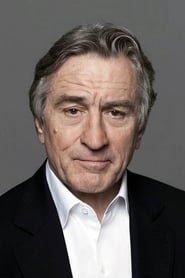
- Robert De Niro (Murray Franklin): Embodies the cruel, performative warmth of media elites who exploit the vulnerable for ratings.
- Zazie Beetz (Sophie Dumond): Serves as Arthur’s neighbor, offering a glimpse of warmth and normalcy that is ultimately revealed to be a haunting projection of his isolated mind.
- Brett Cullen (Thomas Wayne): Portrays the billionaire patriarch not as a saintly philanthropist, but as a cold, aristocratic politician who views Gotham’s impoverished classes with thinly veiled disgust.
The Symbiotic Power of Score and Cinematography
The oppressive atmosphere of Joker is heavily elevated by its technical triumphs. Hildur Guðnadóttir’s haunting, melancholic score—dominated by solo cello performances—acts as the voice of Arthur’s subconscious. It does not manipulate the audience’s emotions; rather, it drags them down into the damp, dark basement of Arthur’s mind. The music feels ancient, heavy, and inevitable.
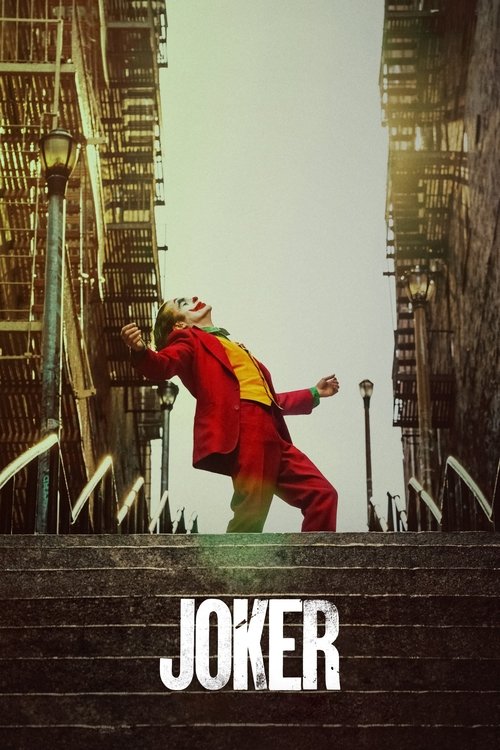
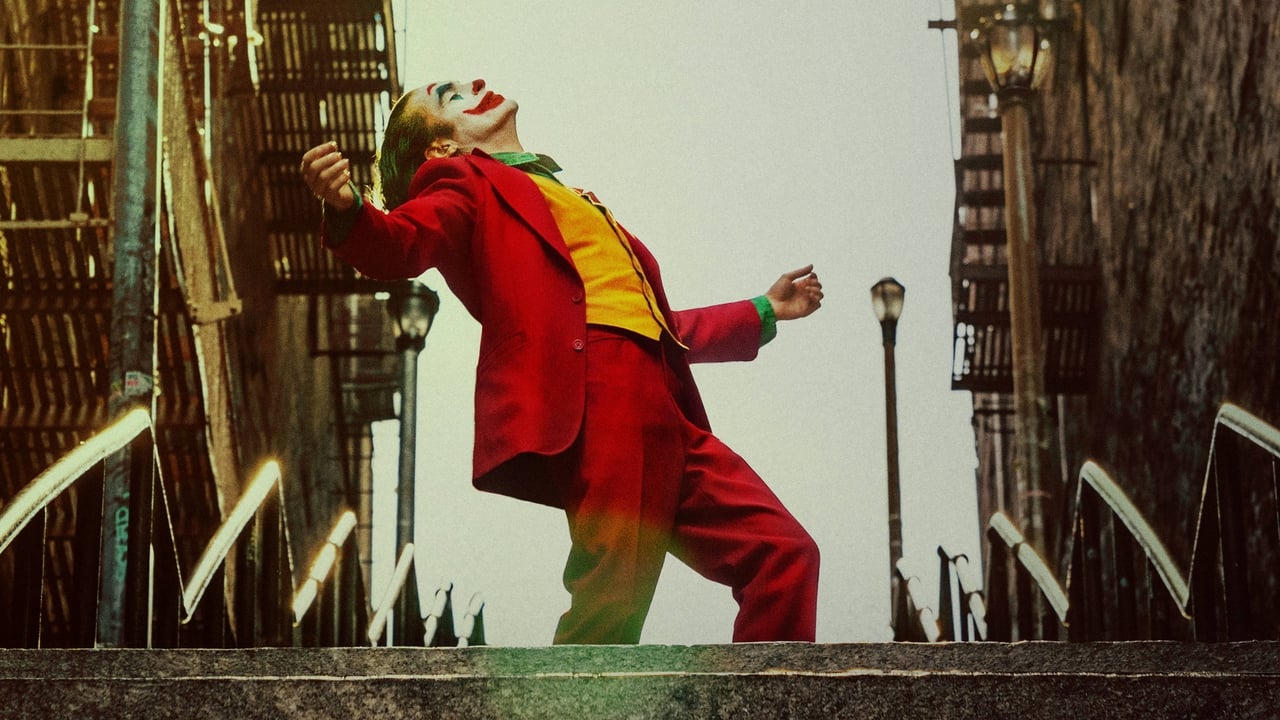
Coupled with Lawrence Sher’s claustrophobic framing, the film captures a city that is actively swallowing its inhabitants. The recurring motif of the concrete stairs that Arthur must painfully climb to reach his home serves as a perfect metaphor for his existence. When he finally descends those same stairs, fully transformed into the Joker, dancing to Gary Glitter’s “Rock and Roll Part 2,” it is a chillingly triumphant moment of complete moral surrender.
The Controversial Legacy of a Modern Masterpiece
Upon its release, Joker ignited a fierce cultural debate. Critics questioned whether the film was a dangerous glorification of incel violence or a profound critique of a society that abandons its most vulnerable citizens. Yet, looking back, the film’s power lies precisely in its ambiguity. It does not validate Arthur’s violence; it traces the anatomy of how that violence is manufactured by an uncaring system.
Ultimately, Joker stands as a towering achievement in modern cinema. It proved that audiences are starved for mid-budget, mature, and uncompromising stories, grossing over a billion dollars worldwide despite its R-rating. It is a uncomfortable, gorgeous, and deeply vital piece of filmmaking that lingers in the mind long after the final, blood-soaked laugh fades to black.
📁 PRODUCTION DETAILS & BOX NOTES
| Title Name | Joker |
|---|---|
| Director | Todd Phillips |
| Release Date | 2019-10-01 |
| Running Duration | 122 mins |
| Primary Genres | Crime, Thriller, Drama |
| Studio Budget | $55,000,000 |
| Production Labs | Warner Bros. Pictures, Joint Effort, Village Roadshow Pictures, Bron Studios, DC Films |
🌟 METROPOLITAN CAST & ROLES







[review_advertinement_space freq=’medium’]
❓ FREQUENTLY ASKED QUESTIONS SUMMARY
Leave a Reply