📊 CRITICS AND AUDIENCE SCORES
The Ghost in the Arena: How Ridley Scott Reclaims the Grandeur of Rome in Gladiator II
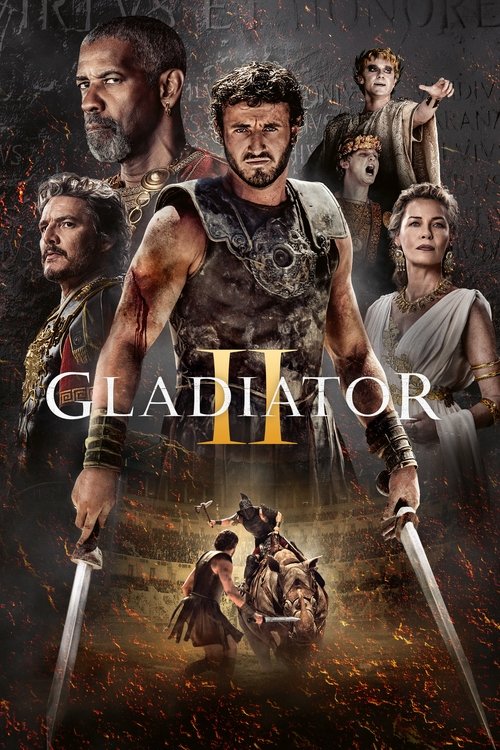
Twenty-four years is a lifetime in cinema. When Ridley Scott’s original Gladiator conquered the box office and the Academy Awards in 2000, it didn’t just revive the dead “sword-and-sandal” genre; it defined a cinematic era with its sun-drenched, dust-choked aesthetic and operatic tragedy. To return to the Colosseum now feels like an act of immense artistic daring—or perhaps mad hubris. Yet, in Gladiator II, Scott proves that his appetite for historical spectacle remains as voracious as ever, delivering a sequel that is heavier, bloodier, and fascinatingly more cynical than its predecessor.
Where the original film was a clean-cut epic of personal vengeance and restored honor, this sequel is a sprawling, Shakespearean tragedy about the rot at the heart of empire. It is a film obsessed with the weight of shadows, particularly the one cast by Russell Crowe’s Maximus Decimus Meridius. By stepping back into this arena, Scott does not merely repeat his greatest hits; he interrogates the very myth of Rome he helped construct at the turn of the millennium.
A Republic of Dust: The Premise and the Prodigal Son
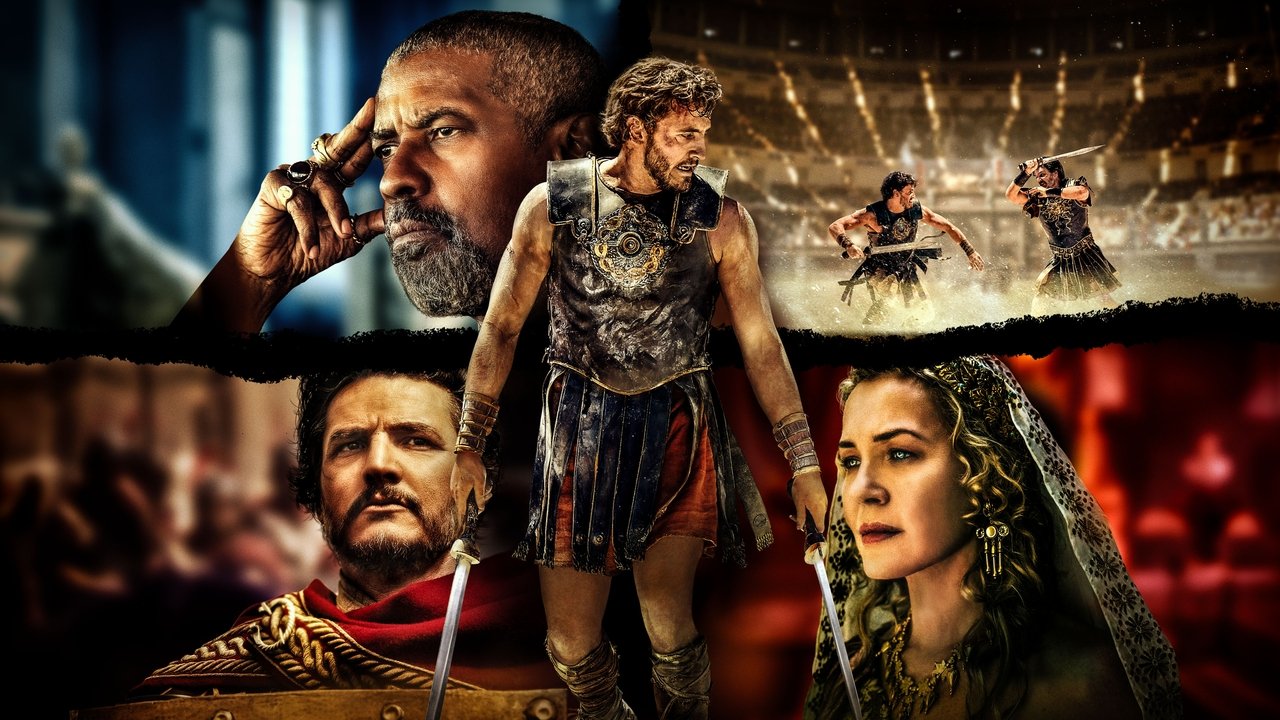
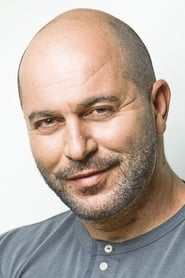
The narrative engine of Gladiator II ignites years after Maximus drew his final breath on the blood-soaked sands of the Colosseum. We find Lucius (played with a simmering, physical intensity by Paul Mescal), the secret heir to Rome, living under an assumed identity in Numidia, North Africa. He has abandoned his birthright, seeking solace in a quiet life with his wife. But Rome’s thirst for expansion is unquenchable. Led by the weary yet ruthless General Acacius (Pedro Pascal), the Roman imperial war machine decimates Lucius’s adopted home, leaving him widowed, enslaved, and burning with a familiar, toxic desire for revenge.
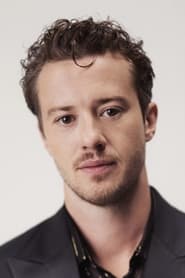
Purchased by the enigmatic, scheming ludus owner Macrinus (Denzel Washington), Lucius is dragged back to the beating heart of the empire he was destined to rule. But this is not the Rome of Marcus Aurelius’s dreams. This is a decaying playground run by twin tyrants: the petulant, painted, and utterly unhinged co-emperors Geta (Joseph Quinn) and Caracalla (Fred Hechinger). As Lucius fights his way through the ranks of the arena, his mother, Lucilla (Connie Nielsen, returning with a regal, heartbreaking grace), sits in the shadows of the court, trying to navigate a conspiracy to save Rome from its own self-destruction.
The screenwriting by David Scarpa understands that a sequel cannot simply replicate the emotional beats of the original without feeling hollow. Instead, it flips the dynamic. Maximus fought to restore the Republic; Lucius fights because he has lost faith that the Republic was ever worth saving. It is a darker, more modern thematic landscape wrapped in the gold-trimmed silk of antiquity.

The Director’s Hand: Ridley Scott’s Late-Career Ferocity
At an age when most directors have long since retired to retrospective panels, Ridley Scott continues to direct with the kinetic energy of a filmmaker half his age. Gladiator II sits comfortably alongside the best of his recent historical epics, capturing both the gritty mud of The Last Duel and the sweeping, tactical scale of Kingdom of Heaven.
Scott’s mastery of the frame remains unparalleled. Working with cinematographer John Mathieson, he replaces the golden, nostalgic hues of the 2000 film with a sharper, more oppressive color palette. The sun still beats down on the sand, but it feels harsher now—bleaching the bones of an empire in terminal decline. Scott also elevates the action to nightmarish new heights. From a terrifying naval battle held within a flooded Colosseum to brutal encounters with genetically mutated baboons and a armored rhinoceros, the action is visceral, physical, and captured with a clarity that puts modern, CGI-heavy blockbusters to shame.
A Masterclass in Contrast: The Cast of Gladiator II
The success of this sequel rests heavily on its performances, and Scott has assembled a cast that balances classical theatricality with raw, contemporary grit:
- Paul Mescal (Lucius): Known for his quiet, devastating turns in indie dramas like Aftersun and Normal People, Mescal undergoes a jaw-dropping physical transformation here. He brings a bruised, animalistic vulnerability to the role of Lucius. He does not try to copy Russell Crowe’s booming authority; instead, he plays Lucius as a man hollowed out by grief, fighting with a reckless abandon that makes every strike in the arena feel desperately dangerous.
- Denzel Washington (Macrinus): Simply put, Washington walks away with the entire movie. Playing a former slave who has climbed the social ladder to become a wealthy gladiator broker and political puppet master, Denzel delivers a performance of purring, venomous brilliance. He treats every line of dialogue like a delicious meal, vibrating with ambition and a quiet, terrifying malice. It is a masterclass in screen presence.
- Pedro Pascal (General Acacius): Pascal provides the tragic, moral heart of the film. Acacius is not a villain, but a soldier exhausted by decades of endless conquest. Pascal plays him with a heavy, mournful dignity that serves as the perfect foil to the chaotic energy of the arena.
- Joseph Quinn & Fred Hechinger (Emperors Geta and Caracalla): This duo channels the absolute worst of Roman decadence. Playing the sibling rulers as a pair of petulant, syphilitic children, they inject a grotesque, pitch-black humor into the court scenes, evoking the historical madness of Caligula and Nero.
Thematic Resonance: The Rot of the “Dream of Rome”
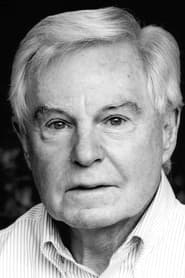
While the first film asked us to believe in the “Dream of Rome”—an idealized beacon of justice and senate-led democracy—Gladiator II is deeply skeptical of such political myths. Through the eyes of both Lucius and Macrinus, we see that Rome’s grandeur is built entirely on the backs of the conquered. The senate, represented once again by the steadfast Senator Gracchus (Derek Jacobi), is powerless against the populism of the arena.
The Colosseum in this film is not just an amphitheater; it is a mass-distraction machine designed to keep the populace drunk on blood while the state collapses. This thematic layer gives the film a chilling contemporary relevance. It suggests that when a society trades its democratic values for the cheap thrills of spectacle, it prepares the ground for its own ruin.
Gladiator II: Quick Review Card
| Aspect | Critic’s Take |
|---|---|
| Director | Ridley Scott (Strikes back with his most energetic epic in years) |
| Standout Performance | Denzel Washington as the Machiavellian Macrinus |
| Visual Style | Visceral, grand-scale action utilizing practical sets and stunning cinematography |
| Key Themes | The weight of legacy, imperial decay, the corruption of power, and political distraction |
| Our Rating | ★★★★☆ (4.5 / 5 Stars) |
The Verdict
Gladiator II is a triumphant, thunderous achievement that justifies its own existence by refusing to live in the shadow of the original. Instead of trying to resurrect the unique magic of Russell Crowe’s Maximus, Ridley Scott focuses on the systemic rot that followed his death. Backed by a career-defining, scenery-chewing performance from Denzel Washington and a deeply soulful physical turn from Paul Mescal, this is a cinematic spectacle of the highest order.
It is a reminder of what big-budget filmmaking can be when guided by a singular, uncompromising artistic vision. For those who seek blood, honor, and the roaring thunder of the arena, Scott delivers a feast that is both thrillingly entertaining and intellectually haunting. Rome has risen once again, and it is glorious.
📁 PRODUCTION DETAILS & BOX NOTES
| Title Name | Gladiator II |
|---|---|
| Director | Ridley Scott |
| Release Date | 2024-11-13 |
| Running Duration | 148 mins |
| Primary Genres | Action, Adventure, Drama |
| Studio Budget | $310,000,000 |
| Production Labs | Paramount Pictures, Scott Free Productions, Lucy Fisher/Douglas Wick Productions |
🌟 METROPOLITAN CAST & ROLES



[review_advertinement_space freq=’medium’]
❓ FREQUENTLY ASKED QUESTIONS SUMMARY
Leave a Reply